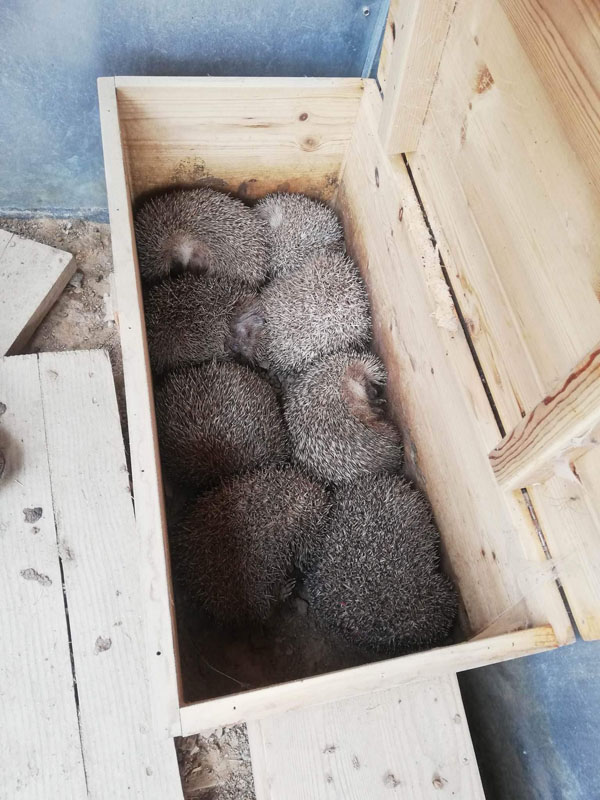
Nous rentrons actuellement dans l’hiver, une période un peu particulière pour certains animaux, qui rentrent en hibernation. Mais comment ce phénomène se produit-il ? Quels mécanismes le permettent ? Dans ce post, nous répondons à toutes vos interrogations !
Tout d’abord, une définition simple. L’hibernation est un état d’hypothermie régulée permettant aux animaux de conserver leur énergie pendant l’hiver. Elle est à ne pas confondre avec l’hivernation, qui traduit davantage un état de somnolence où animal continue de s’alimenter ou de se déplacer.
Mais alors, comment ça se passe ? Les animaux hibernants ralentissent leur métabolisme, c’est-à-dire l’ensemble des transformations chimiques et biologiques de l’organisme, jusqu’à un niveau très bas. Concrètement, ils abaissent leur taux respiratoire et leur température jusqu’à près de 0°C, et puisent le peu d’énergie nécessaire dans leur réserves graisseuses, accumulées pendant les mois actifs. Baissent également le rythme cardiaque, le flux sanguin (sauf au niveau du coeur, du cerveau et du tissu adipeux) ou encore le taux d’hormones de croissance.
Pourquoi l’hibernation est-elle vitale à certains organismes ? Et bien tout comme la migration, c’est une stratégie d’adaptation au froid. Mais elle permet également de survire face à la raréfaction de l’eau et/ou de la nourriture.
Quels animaux hibernent ? Pour faire simple, les animaux qui hibernent sont ceux dont le corps ne produit pas de chaleur suffisante pour survivre aux températures hivernales. Il y a la marmotte, le loir, le hérisson ou encore l’écureuil et la chauve-souris. Mais attention, certains animaux comme l’ours ou le blaireau hivernent mais n’hibernent pas ! Et petit fun fact : une étude de 2022 de la revue scientifique l’Anthropologie émet l’hypothèse que notre ancêtre l’Homme de Néandertal, aurait pu hiberner pour se protéger des températures extrêmes !
Comment sortir de l’hibernation ? Tout simplement par un réchauffement rapide du corps, s’accompagnant entre autres d’une augmentation de la fréquence cardiaque. Et tout est rétabli en quelques heures seulement !
Hibernation
Winter is approaching, and it’s a special time for some animals who go into hibernation. But how is this whole process happening ? Through which mechanisms ? In this post, we answer all your questions !
Let’s start with a definition. Hibernation is a state of regulated hypothermia which allows the animals to retain their energy during winter. But don’t get confuse with the winterization, which is more of a somnolence state, where the animal keeps eating and moving.
But how is it all happening ? The animals who hibernate slow down their metabolism, that is to say the whole chemical and biological transformations of the organism, until a very low level. In concrete terms, they lower their breathing and temperature close to 0°C, while getting the small amount of energy needed in the adipose reserves accumulated during the active period. They also lower their heart rate and flow (except in the heart, brain and adipose tissue) or even their growth hormones level.
Why is hibernation vital to some organisms ? Just like migration, it is a strategy to adapt themselves to low temperatures. But it also allows them to survive facing the increasing scarcity of food and/or water.
Which animals hibernate ? To make it simple, the ones that hibernate are those whose body can’t produce enough warmth to survive the wintery temperatures. There is the marmot, the dormouse, the hedgehog or even the squirrel or the bat. But be careful, some animals such as the bear or the badger winterize, they don’t hibernate ! And fun fact : a 2022 study from the scientific paper Anthropology assume that our ancestor the Neanderthal could have hibernate to survive the extreme temperatures !
How to come out of hibernation ? It simply occurs by a warmth of the body, supported by, among others, an increase of the heart rate. And it only takes a few hours !
Η Χειμερία Νάρκη
Έρχεται ο χειμώνας και μαζί του φέρνει μια πολύ σημαντική περίοδο για τα ζώα που πέφτουν σε χειμερία νάρκη. Πώς εκτυλίσσεται όμως όλη αυτή η διαδικασία; Με την ανάρτηση αυτή, θα απαντήσουμε σε όλα σας τα ερωτήματα!
Ας ξεκινήσουμε όμως με τον ορισμό της λέξης. Η χειμερία νάρκη είναι μία κατάσταση ρυθμιζόμενης υποθερμίας, η οποία επιτρέπει στα ζώα να διατηρούν την ενέργειά τους κατά τη διάρκεια του χειμώνα. Δεν πρέπει όμως να την συγχέουμε με τη διαχείμαση, η οποία είναι μία κατάσταση λήθαργου, κατά την οποία τα ζώα συνεχίζουν να τρέφονται και να κινούνται.
Πώς όμως συμβαίνουν όλα αυτά; Τα ζώα που πέφτουν σε χειμερία νάρκη επιβραδύνουν το μεταβολισμό τους, δηλαδή όλες τις χημικές και βιολογικές διεργασίες του οργανισμού τους, σε πολύ χαμηλά επίπεδα. Πιο συγκεκριμένα, μειώνουν τις αναπνοές τους και τη θερμοκρασία τους σχεδόν στους 0°C, ενώ λαμβάνουν τη μικρή ποσότητα ενέργειας που χρειάζονται από τα αποθέματα λίπους που έχουν δημιουργήσει κατά την προηγούμενη περίοδο. Χαμηλώνουν επίσης τους καρδιακούς τους παλμούς και τη ροή του αίματος (με εξαίρεση την καρδιά, τον εγκέφαλο και τους λιπώδεις ιστούς) ή ακόμα και τα επίπεδα της αυξητικής τους ορμόνης.
Για ποιο λόγο είναι απαραίτητη η χειμερία νάρκη για ορισμένους οργανισμούς; Όπως και η μετανάστευση, η χειμερία νάρκη είναι μία μέθοδος προσαρμογής των ζώων στις χαμηλές θερμοκρασίες, η οποία τους βοηθά και να επιβιώσουν, εν όψει της αυξανόμενης έλλειψης τροφής και/ή νερού.
Ποια ζώα πέφτουν σε χειμερία νάρκη; Με λίγα λόγια, τα ζώα που πέφτουν σε χειμερία νάρκη είναι αυτά των οποίων το σώμα δεν μπορεί να παράγει αρκετή θερμότητα για να επιβιώσουν στις συνθήκες του χειμώνα. Για παράδειγμα, οι αρκτόμυες, oι τυφλοπόντικες, οι σκαντζόχοιροι, ή ακόμα και οι σκίουροι ή οι νυχτερίδες. Προσέξτε όμως: ορισμένα ζώα, όπως η αρκούδα και ο ασβός, διαχειμάζουν απλά, δεν πέφτουν σε χειμέρια νάρκη! Και μια ενδιαφέρουσα είδηση: μία μελέτη του 2022 που δημοσιεύτηκε στο επιστημονικό περιοδικό Anthropology αναφέρει ότι πιθανώς και οι πρόγονοί μας, οι Neanderthals, να χρειάστηκε να πέσουν σε χειμερία νάρκη για να επιβιώσουν από το τσουχτερό κρύο!
Πώς βγαίνουν τα ζώα από τη χειμερία νάρκη; Αυτό συμβαίνει μέσω της θερμότητας του σώματός τους, η οποία οφείλεται σε διάφορους παράγοντες, και την αύξηση των καρδιακών τους παλμών. Και όλα αυτά γίνονται μέσα σε λίγες ώρες μόνο!